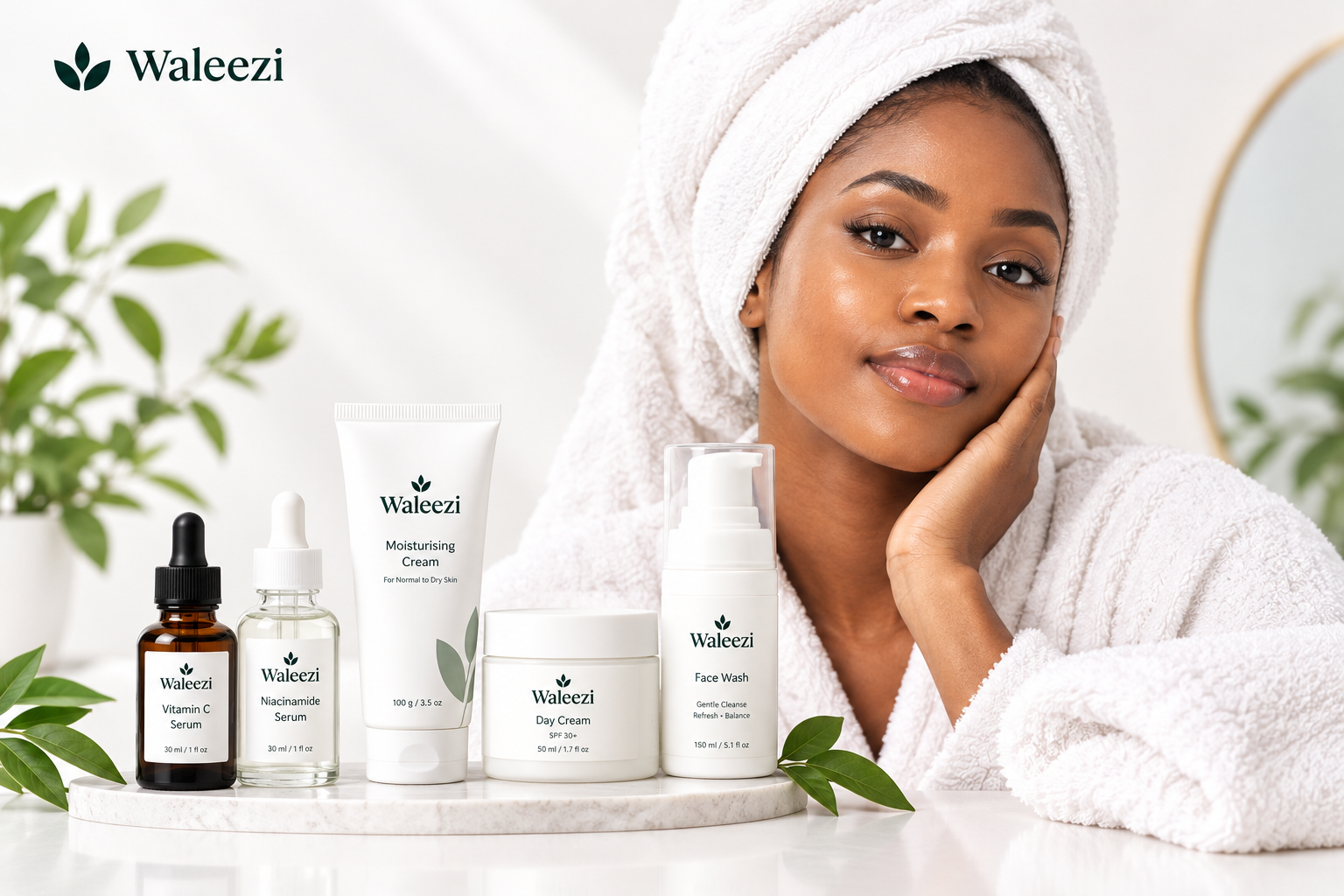
My dear, let’s talk properly. You know that feeling when you wake up in Lagos and your face already looks tired before the day even starts? Or when Harmattan hits and suddenly your skin is flaking like dry fish while your nose is running? Or the rainy season when everything feels sticky and your pores start acting like they want to host a party?
I’ve been there. Plenty times. This Nigerian weather does not play. One minute the sun is roasting you at the bus stop, next minute the humidity is sitting on your face like extra luggage, then Harmattan comes and dries everything out until your skin is begging for mercy. And if you have melanin-rich skin like many of us, the rules that work for other climates may not always suit the conditions we deal with here.
So I decided years ago that I was tired of complicated routines that promised the world and left my skin confused. I started keeping things simple. Real simple. And I began sharing what actually worked for me and the women around me who deal with the same dust, heat, market sweat, and seasonal changes.
This is not a 12-step K-beauty routine. This is a straightforward morning and night plan that respects Nigerian weather and the kind of products you can actually find in shops around you or order without stress. No need to overdo am. Your skin go thank you.
Ready? Let’s build something that fits your real life.
Why Nigerian Skin Needs Its Own Approach
Ever noticed how your skin behaves differently in the rainy season compared to dry season? One period it feels oily and congested, the next it feels tight and dull. That’s not your imagination.
Nigeria’s climate can throw a lot at your skin:
- High humidity that makes oil and sweat mix on the surface
- Dust from roads, markets, and Harmattan winds that can settle on the skin
- Strong sun and UV exposure that can worsen the appearance of dark marks and uneven tone
- Sudden temperature shifts between air-conditioned offices and outdoor heat
Melanin-rich skin is beautiful and resilient, but pigmentation can sometimes become more noticeable after inflammation or irritation. Breakouts can leave marks that take time to fade, while dry patches can become visibly ashy. Excess oil can also make makeup feel uncomfortable by midday.
The good news is you don’t need a cupboard full of products. You need a few reliable steps done consistently. Consistency beats complexity every single time in this weather.
When I first simplified my own routine, I noticed my skin calmed down within weeks. Less random breakouts. Better glow even on dusty days. And I stopped wasting money on things that sounded fancy but did nothing for this climate.
The Foundation: Cleanse, Treat, Moisturise, Protect
Before we jump into morning and night, let’s understand the four pillars that matter most here.
- Cleanse
You need to remove the day’s dirt, oil, sunscreen, and buildup without stripping your skin. Harsh soaps can leave your face feeling tight, dry, or irritated, while some people notice increased oiliness when they repeatedly over-cleanse.
- Treat (optional but helpful) This is where you address specific concerns like dark spots, texture, or dullness. Keep it light. One or two targeted products maximum.
- Moisturise
Even oily skin can benefit from moisture. A lightweight moisturiser can help support the skin barrier without leaving your face feeling heavy or greasy. The key is choosing a texture that suits your skin.
- Protect
Sunscreen during the day is especially important if you spend time outdoors. UV exposure can contribute to premature skin ageing and can make dark spots and uneven pigmentation more noticeable.
That’s it. Four things. Everything else is extra.
Morning Routine: Start Clean and Protected
Morning is about preparation. You’re getting ready to face heat, dust, and possible long hours outdoors or in traffic.
Here’s a simple flow that takes less than ten minutes once you get used to it.
-
Step 1: Cleanse Gently
Splash your face with lukewarm water first if you woke up feeling relatively clean. Then use a mild cleanser.
What works well here:
- A gentle gel or cream cleanser that doesn’t foam aggressively
- Something with ingredients like glycerin or mild surfactants
Avoid anything that leaves your face squeaky clean. That tight, stripped feeling can be a sign that your cleanser is too harsh for your skin.
I usually cleanse for about 30–40 seconds, focusing on the T-zone where oil collects overnight. Rinse thoroughly. Pat dry with a clean towel don’t rub.
Tip: If you live in a dusty area or near a major road, a double cleanse on heavier pollution days can help. First with a cleansing balm or oil to dissolve sunscreen and other buildup, then your regular cleanser. But most days one gentle cleanse is enough.
-
Step 2: Tone (Optional but Nice)
Toner is not compulsory. Many people skip it and still have great skin. But if you like that fresh feeling or want a light layer of hydration, choose an alcohol-free one.
Look for something soothing with ingredients such as glycerin or other hydrating ingredients. If you are using a toner containing an active ingredient such as niacinamide, remember that you don’t need multiple products containing the same active just because they are available.
Apply with clean hands or a cotton pad hands are fine and waste less product.
This step can feel especially helpful after Harmattan nights when your skin feels a bit dry in the morning.
-
Step 3: Treat (Keep It Light)
Morning is not the time to pile on strong actives. If you use treatment products, choose one that fits your particular concern.
If you have dark marks or dullness, a vitamin C serum or a niacinamide product can sit well under moisturiser and sunscreen. Use a few drops, press into the skin, and wait a minute before the next step.
Don’t pile on five serums. One focused treatment is plenty. Your skin in this climate already has a lot to deal with.
-
Step 4: Moisturise
Even if your skin feels oily, moisturise. Choose a lightweight lotion or gel-cream that absorbs quickly. Something that says “non-greasy” or “oil-free” on the bottle may work better here than thick creams, especially if you dislike a heavy feeling on your face.
Apply while your skin is still slightly damp from toner or water. That can help reduce moisture loss and leave the skin feeling more comfortable.
I’ve seen so many people skip this step because they think oily skin doesn’t need it. Then they wonder why their face feels uncomfortable or looks increasingly greasy by afternoon. Give your skin the moisture it needs without choosing a heavy formula simply because it is labelled as a moisturiser.
-
Step 5: Sunscreen-The Most Important Morning Step
Please don’t skip this.
Nigerian sun can be intense, especially when you spend significant time outdoors. UV exposure can contribute to dark spots, uneven tone and premature skin ageing. Even on cloudy days, UV radiation can still reach your skin.
Choose a sunscreen you will actually use every day. For many of us that means:
- Lightweight, non-whitening formulas that don’t leave a noticeable cast on melanin-rich skin
- At least SPF 30
- Something that feels comfortable under makeup or on its own
Apply enough to adequately cover your face, ears and neck. The commonly used two-finger method can be a practical way to estimate an appropriate amount for the face and neck, although the exact amount needed depends on the size of the area you’re covering.
Reapply when you’re spending extended periods outdoors, particularly if you’re sweating heavily, swimming, or wiping your face frequently.
If you find traditional sunscreens too heavy, look for gel or fluid textures. There are more options available now than there used to be.
That’s your morning routine. Cleanse → (tone) → treat → moisturise → sunscreen. Five minutes on good days, ten when you’re being thorough.
Night Routine: Repair and Reset
Night is when you can properly remove the day’s buildup and give your skin the products it needs without having to layer them underneath sunscreen or makeup.
-
Step 1: Remove Makeup and Sunscreen Thoroughly
If you wore makeup or sunscreen, start with a cleansing balm, oil, or micellar water. These can help loosen makeup, sunscreen and other products before your regular cleanser.
Massage gently for a full minute. Really work it in, especially around the hairline and jaw where residue can sometimes remain. Then wipe or rinse and follow with your regular cleanser.
This double cleanse can be a useful upgrade for people who regularly wear makeup or water-resistant sunscreen. You may not need to double cleanse every single night if you haven’t worn makeup or substantial sunscreen.
-
Step 2: Cleanse
Same gentle cleanser as morning. Take your time. Let the water run over your face. Feel the difference when the day is fully off.
-
Step 3: Treat
Now is the time for stronger helpers if you use them.
Common useful options for Nigerian skin concerns:
- A niacinamide serum for supporting the skin barrier and addressing concerns such as uneven-looking tone
- A gentle retinoid if you want to work on concerns such as texture, fine lines and uneven tone (start slowly two or three nights a week can be a reasonable starting point for some people)
- An alpha hydroxy acid (like lactic or mandelic) once or twice a week if you want gentle chemical exfoliation
Never use strong acids and retinoids on the same night when you’re starting out. Your skin will tell you if it’s too much tightness, flaking, burning, redness, or irritation are signs to slow down or stop the offending product.
If your skin is sensitive or you’re new to actives, stick to one treatment product and build from there. There’s no rush.
-
Step 4: Moisturise Generously
Night moisturiser can be a bit richer than the morning one if your skin needs it. In Harmattan especially, a cream with ceramides or shea can feel comforting.
Apply while skin is damp. Use more on drier areas like cheeks if needed. Don’t forget your neck.
Some people like to add a few drops of facial oil on top during the driest months. Just a little. Press it in. It can help reduce moisture loss for some people, particularly when the skin feels very dry.
-
Step 5: Optional Occlusive for Very Dry Periods
On the driest Harmattan nights, a thin layer of plain petroleum jelly or a simple balm over your moisturiser on the driest patches can help seal everything in. Use sparingly. This is not everyday for most people, but it can be useful when your skin is particularly dry.
That’s night: thorough cleanse → treat → moisturise. Done.
Adjusting for the Seasons
Your routine should flex a little with the weather. Rigid routines can be difficult to maintain in Nigeria.
| Season / Condition | What Your Skin May Feel Like | What to Adjust |
|---|---|---|
| 🌧️ Rainy Season / High Humidity | Oily, sweaty or congested | Use lighter moisturisers, pay attention to cleansing if you are sweaty, and keep products minimal. |
| 🌬️ Harmattan / Dry Season | Tight, flaky or ashy | Use richer moisturisers, add hydration if needed, and cleanse gently. |
| ☀️ Hot Sunny Periods | Oily, sweaty and exposed to UV | Choose lightweight products, use sunscreen consistently, and reapply when spending extended periods outdoors. |
Rainy Season / High Humidity
- Lighter moisturisers
- More attention to cleansing if you’re dealing with significant sweat and buildup
- Keep your routine simple if your skin feels congested
- Still wear sunscreen — UV exposure doesn’t disappear because the weather is cloudy
Harmattan / Dry Season
- Richer moisturisers
- Extra hydration if your skin feels dry
- Gentler cleansing so you don’t strip further
- A humidifier may help if the indoor air is particularly dry
- Lip balm becomes especially useful
Hot Sunny Periods
- Lightweight products if heavier textures feel uncomfortable
- Diligent sunscreen and reapplication when outdoors for extended periods
- Cooling products if they feel good (aloe-based ones are popular for a reason)
Listen to your skin more than any fixed schedule. If it feels tight, add moisture. If it feels congested, simplify and cleanse well.
Product Choices That Make Sense Here
You don’t need imported luxury for this to work. Many effective options are available in Nigerian pharmacies, beauty stores, and online.
Look for:
- Gentle cleansers that don’t foam like detergent
- Lightweight moisturisers that absorb
- Sunscreens that don’t leave white cast
- Serums with clear, simple ingredient lists
When trying something new, patch test where appropriate and introduce one product at a time so you have a better idea of how your skin responds.
And please, be careful with anything that promises “instant whitening” or dramatic bleaching. Some unregulated or inappropriate lightening products can cause serious skin problems. Focus on healthy, even-looking skin instead. A strong skin barrier and consistent care are a better long-term goal than trying to change your natural complexion quickly.
Common Mistakes I See All the Time (Please Don’t Do These)
I say this with love, because I’ve made some of these myself.
Over-cleansing
Washing three or four times a day with strong soap. Your skin barrier can suffer, and irritation and dryness can follow. Twice a day is enough for most people. An additional cleanse may be reasonable after heavy sweating or significant exposure to dust and grime.
Skipping moisturiser because of oiliness
This can leave oily skin feeling uncomfortable and may make it harder to maintain a healthy skin barrier. Choose a lightweight moisturiser instead of skipping moisturiser completely.
Using too many actives at once
Vitamin C + retinol + acid + niacinamide every night. Your face will rebel. Introduce slowly. Less is more when you’re building a routine.
Ignoring sunscreen
“I don’t go out much” or “I have dark skin so I don’t need it.” Melanin provides some natural protection, but it does not make skin immune to UV exposure. Sun exposure can contribute to uneven tone, pigmentation and premature skin ageing.
Changing products every week
Skin needs time to respond. Unless a product is causing irritation, give a routine enough time to assess how your skin is responding. Some changes can take several weeks or longer to become noticeable.
Using body lotion on the face
Some body products are too heavy or fragranced for facial skin. Stick to face-specific formulas when possible, especially if your skin is sensitive or prone to breakouts.
Touching your face constantly
Especially with unwashed hands after being outside. Dust, oil and other contaminants can easily be transferred to your face.
If you’ve been doing any of these, don’t stress. Just adjust gently starting today.
How to Make It Stick in Real Nigerian Life
Routines fail when they don’t fit actual life. So make yours realistic.
- Keep products in one small area of your bathroom or bedside so you actually see them
- Do your night routine before you’re too tired maybe right after dinner or before scrolling
- If mornings are rushed, prepare the night before (cleanser and moisturiser ready)
- Travel or market days: carry a small cleanser or micellar water and a mini moisturiser + sunscreen
- When power is out or water is limited, prioritise a thorough cleanse when water is available and use a gentle cleansing option in between if needed
Progress over perfection. Missing one night won’t ruin everything. Showing up most days will compound.
What Results Look Like Over Time
In the first one to two weeks you might notice cleaner-feeling skin and less midday oiliness if you were over-stripping before.
By four to six weeks, some people may notice improvements in texture, irritation or breakouts, although the timeline varies from person to person.
Longer term, consistent sunscreen and barrier care can help protect against ongoing UV-related damage and may help prevent existing dark marks from becoming more noticeable whether that stress is Harmattan, heat, or life itself.
Your skin won’t become someone else’s skin. It will become a healthier, more balanced version of itself. That’s the real goal.
A Few Final Sisterly Notes
Start simple. Master cleanse + moisturise + sunscreen first. Add treatments only when that foundation feels steady.
Be patient with your skin the same way you’d be patient with a younger sibling who’s learning. It responds to consistency more than intensity.
And remember this weather is not your enemy forever. Once you learn how to work with it instead of fighting it, your skin often surprises you with how resilient it can be.
You’ve got this. One gentle, consistent routine at a time.
If something confuses you or your skin reacts strangely, pause the new products and go back to basics until it calms. There’s no shame in simplifying again.
If you develop persistent, painful or worsening breakouts, severe irritation, a rash that does not settle, or pigmentation that continues to change despite simplifying your routine, consider speaking with a dermatologist or another qualified healthcare professional.
Now go wash your face properly tonight and give it the care it deserves. Your future self (and your mirror) will notice.
Take care of yourself, okay?

Odior Annah